Split, Stacked, Seasoned: The Honest Work Behind a Mow Cop Fire
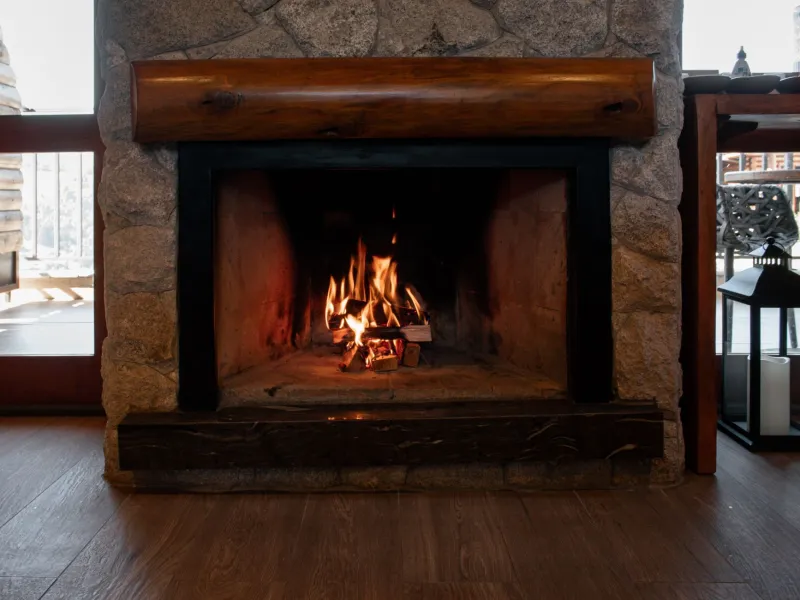
By the second week of November 2026, the hill has stopped pretending. The leaves are down, the wind has a proper edge to it, and the first person through the door at Mow Cop Inn is usually making a beeline for the fire before they have even said hello. You can tell a lot about a pub by its fire. A sulky little flame in a cold grate says one thing. A deep, steady burn that throws heat across the room says another. Ours is the second sort, but only because a lot of unglamorous work happens before anyone strikes a match.
The first match of the day
The fire is not a decoration. It is a working part of the pub, and it has a routine. The grate is cleared of the previous night's ash, though not all of it - a thin bed of ash helps the next fire settle. Kindling goes in first, then a couple of smaller logs, then patience. One of the bar team will crouch there for a few minutes, adjusting the air, listening for that first proper crackle. It is not a job you can rush, and it is not a job anyone minds doing. There is something quietly satisfying about setting a fire that will be shared by dozens of people you may never speak to.
The first proper fire of the season is always a small event in its own right. Someone says it is cold enough. Someone else says it is not, really. Then the match goes in, the room starts to smell of woodsmoke, and the argument is over. Winter has arrived on the hill.
What the right log actually does
You do not need to be a woodsman to notice the difference between a good log and a bad one. A good log burns hot and clean, with a steady flame and very little smoke. A bad one hisses, spits and sulks. It may look fine on the outside, but if it is damp inside, it will waste its heat boiling off water instead of warming the room. For a pub fire, that matters. The point is not just to have flames to look at. The point is to make the snug, the bar and the tables nearby feel genuinely warm on a day when the hill is doing its best to freeze your boots.
We aim for wood that is properly seasoned, with a moisture content below 20 per cent. Hardwoods such as ash, beech and oak are the mainstay because they burn slowly and give out good heat. Softwoods have their place as kindling - they catch quickly and get the fire going - but they are not the backbone of a winter grate. Treated timber, painted offcuts and anything that has been lying in a puddle for a year are not welcome. They smell wrong, burn badly and are not worth the risk.
Where the wood comes from
As much as possible, the wood comes from small woodland operations on the Cheshire and Staffordshire sides of the hill. Some of it is from local tree work - the kind of honest, unglamorous jobs that keep lanes clear and gardens safe. Some comes from managed woodland where thinning and coppicing are part of the plan, not an afterthought. The best suppliers are the ones who can tell you where a load has come from, how long it has been down and how it has been stored. That is not romantic nostalgia. It is basic good practice.
We look for certified Ready to Burn wood where we can, because it gives a straightforward assurance that the wood is dry enough to burn well. Local sourcing matters too. It keeps money in the area, shortens the journey from woodland to woodpile and makes it easier to have a proper conversation with the person who actually handles the timber. A pub fire should not come at the expense of the landscape that makes the pub worth visiting.
The patience of seasoning
The woodpile is a calendar. The load that arrives in late summer is not really for that week. It is for the first cold snap, for the run-up to Christmas, for the long, dark evenings in January when the hill feels a long way from anywhere. Logs need air. They need to be stacked off the ground, with gaps for the wind to move through, and covered at the top rather than wrapped up like a parcel. A tarp thrown over the whole stack might keep the rain off, but it can also trap moisture in. The aim is a dry log, not a sweaty one.
Seasoning takes time. Ash is often ready sooner; oak rewards a longer wait. The woodpile gets rotated so that older stock is used first and newer deliveries are left to settle. It is not complicated, but it is easy to get wrong if you are in a hurry. The same is true of the fire itself. A grate that is stuffed full of logs and left to smoulder is not a good fire. It is a smoke machine with ambitions.
Keeping the grate, not just the flame
The team who tend the fire will tell you that the job is as much about the grate as the flames. Ash needs to be cleared regularly, but not scoured out completely. Air needs to flow. The chimney needs to be swept on schedule, and the flue kept in good order. These are the dull bits - the bits nobody writes a poem about - but they are the reason the fire is reliable rather than temperamental. A pub fire that works is a small piece of maintenance, repeated often.
There is a ritual to closing up, too. The last log goes on, the air is turned down, and the embers are left to bank overnight. In the morning, there is ash to clear and kindling to set. It is the same job, day after day, and that is part of the comfort. You do not have to think about it when you are sitting by the fire with a pint. Someone else has already done the thinking.
A pint, a chair and the quiet economics
A fire changes how people use a room. They linger. They order another drink. They take the seat nearest the hearth and stay for one more conversation than they planned. On a hill like Mow Cop, where the weather can turn a short walk into a proper expedition, that warmth is not a luxury. It is part of the welcome.
So the next time you see a log basket by the door, or someone from the team carrying an armful of split wood through the bar, give them room. There is a whole quiet craft behind that fire - the supplier, the stack, the seasoning, the sweep, the first match of the day. It is not a grand story. It is just a good one, kept going log by log.