The Oven, the Batter and the Last Light: Sunday Roast Timing on Mow Cop
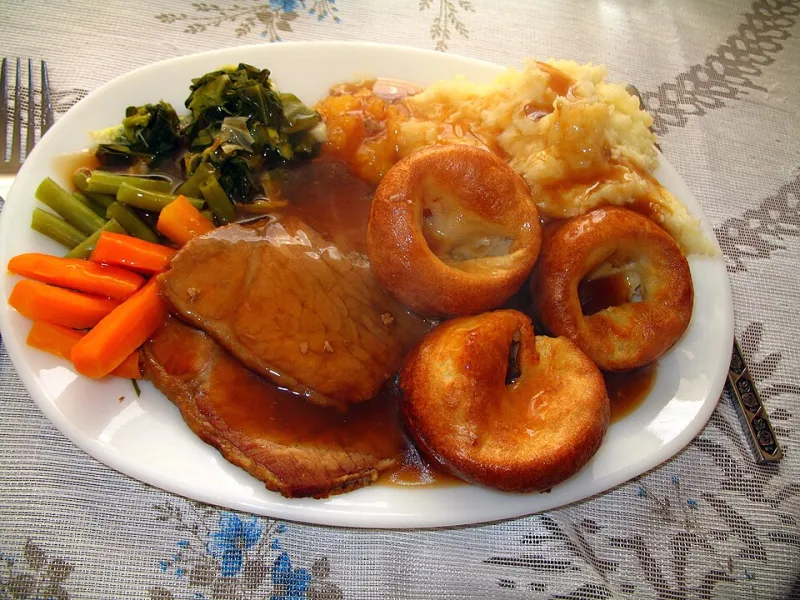
Photo: by robbie jim, CC BY 2.0, via Wikimedia Commons
A Sunday roast at Mow Cop Inn does not begin when the first plate leaves the pass. It begins earlier, in a quiet kitchen with the radio low and the ovens coming up to temperature. By the time the hill is busy with boots and buggies and late-morning dog walks, the work is already well underway. The roast is a weekly ritual, and like any good ritual it depends on timing, repetition and a certain amount of unglamorous preparation.
The Clock Starts Before the Doors Do
Sunday service has its own rhythm. The kitchen works backwards from the first sitting: meat in, potatoes parboiled and roughed up, vegetables trimmed, stock on the simmer, batter mixed and left to settle. Nothing about this is theatrical. It is a list, worked through in order, with one eye on the weather coming across the hill and the other on the clock.
Altitude is a useful thing to blame when the wind is doing its best to remove your hat, but it does not change the basic physics of an oven. What it does change is the appetite of the people arriving. A climb up from the village or a circuit of the ridge makes a plate of roast beef and Yorkshire pudding feel less like lunch and more like a sensible decision. The kitchen knows this. Portions are generous without being reckless, and the timing is set so that the first tables are not kept waiting while the last joints are carved.
Batter That Is Left Alone
Yorkshire puddings attract strong opinions, which is exactly as it should be. At Mow Cop Inn the approach is not secretive. The batter is simple, rested, and poured into fat that is properly hot. The oven door stays shut. That last part is the hardest instruction to follow in a busy kitchen, because a Yorkshire pudding in its first few minutes is far more interesting than almost anything else on the prep list.
The real skill is in the batch timing. Sunday roasts mean volume, and volume means the batter has to work around the meat, the potatoes and the vegetables. A tray that goes in too early will be past its best by the time the second sitting arrives. A tray that goes in too late holds up the plates. The answer is a steady rotation, a well-organised pass and a cook who knows exactly how the oven behaves when it is full.
On the plate, the pudding is not a garnish. It is part of the architecture: something to hold gravy, something to cut through the richness of the meat, something that makes a Sunday lunch feel like a Sunday lunch rather than a large dinner on a confusing day.
Gravy, Greens and the Ordinary Work
Gravy is where a roast can quietly fall apart. At Mow Cop Inn it is made from the roasting juices, built up with stock and seasoned with care. It should taste of the meat it accompanies, not of a packet hiding in the background. The vegetables are chosen for the season and cooked with a little restraint. Carrots with a bit of bite, greens that have not been asked to give up entirely, potatoes that are crisp at the edges and fluffy inside.
The kitchen leans on local suppliers where it can: a butcher who understands the cuts, a greengrocer who knows what is good that week, a dairy that turns up when it says it will. These relationships are not a marketing line. They are practical. A hilltop pub cannot nip out for a forgotten sack of potatoes at ten minutes to service. The order has to be right, the delivery has to arrive, and the prep list has to reflect what is actually in the fridge.
A Plate That Settles the Room
Sunday lunch at Mow Cop Inn is a mixed crowd. There are walkers who have earned it, families who have negotiated the hill with a pram and a sense of humour, regulars who know which table they want, and visitors who have come for the view and stayed for the gravy. The roast is designed to settle all of them.
That is the quiet purpose of the Sunday menu. It is not trying to surprise anyone. It is trying to be reliable in the best sense: hot food, proper portions, a pint that suits the plate and a pudding if there is room. The room fills, the noise rises, and the kitchen keeps its head down and its timings tight. By late afternoon the light is going, the hill is getting cold, and the last plates are being cleared. The roast has done its job. It has slowed the day down and sent people back out into the evening fed and settled.
After the Last Plate
When service ends, the work does not. There are trays to soak, surfaces to wipe, stock to label and an order to review for next week. The batter bowl will be mixed again. The ovens will be brought back up to temperature. A Sunday roast is a weekly ritual, and the quiet architecture behind it is mostly repetition: good ingredients, sensible timing and a kitchen that knows the value of leaving a Yorkshire pudding alone until it is ready.